
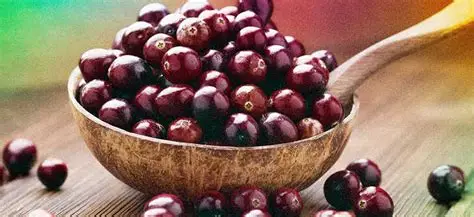
Brazilian Açaí (pronounced ah-sah-EE) is a deep purple berry from the açaí palm tree, native to the Amazon Rainforest. While it has become a global “superfood,” its role in Brazilian culture is deep and distinct.
1. Traditional vs. Modern Preparation
- Traditional: In the Amazon region, açaí berries are traditionally soaked and mashed to create a thick, creamy, and unsweetened paste. It is often eaten with fish or game as part of a main meal and has a earthy, rich flavor.
- Modern (The Classic “Bowl”): In the rest of Brazil, especially in the south and southeast, açaí is famously consumed as a sweetened, frozen purée. The frozen pulp is blended to a sorbet-like consistency and served in a bowl, topped with granola, banana slices, and sometimes other fruits or guarana syrup. This version is enjoyed as a refreshing snack, breakfast, or post-workout meal, particularly in beach cities like Rio de Janeiro.
2. Cultural Significance
Açaí is intrinsically linked to the energy and lifestyle of modern Brazil. It’s a staple at juice bars, beach kiosks (“barracas”), and gyms. For many Brazilians, a bowl of açaí is the perfect way to cool down and recharge, symbolizing health, vitality, and the vibrant spirit of the coast.
3. The “Superfood” Aspect
Açaí is renowned for being packed with antioxidants, healthy fats, and fiber, which contributed to its international fame. However, in Brazil, it’s first and foremost a beloved daily treat that is both nutritious and delicious.


