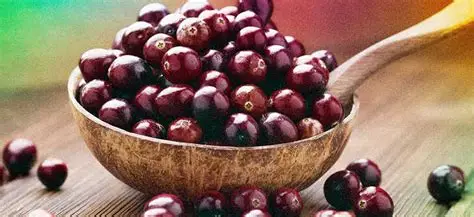
The Jabuticaba (pronounced zhah-boo-chee-BAH-kah) is one of Brazil’s most distinctive and beloved native fruits.
1. The “Tree Grape”
Its most astonishing feature is how it grows. Unlike most fruits, Jabuticabas grow directly on the trunk and main branches of the tree (Plinia cauliflora). This unusual growth habit, known as cauliflory, makes the tree look like it is covered in dark, purple boils when in season. The fruit itself is a small, round berry with a thick, dark purple skin and a sweet, white, gelatinous pulp inside.
2. Flavor and Use
Jabuticaba has a unique flavor, often described as a cross between grape, lychee, and a hint of sourness. It is immensely popular eaten fresh, but it is also widely used to make jams, jellies, liqueurs, and especially artisanal wines. A major downside is that the fruit is highly perishable and begins to ferment just a few days after being picked, which is why it’s rarely found fresh outside its growing regions.
3. Cultural Significance
The Jabuticaba tree is a common sight in the backyards of southeastern Brazil. It evokes a strong sense of nostalgia and is deeply associated with childhood and family gardens. The phrase “enfeitar jabuticaba” (to decorate a jabuticaba tree) is a popular Brazilian saying, meaning to claim credit for something you didn’t actually do, as the tree naturally “decorates” itself with fruit.
In short, the Jabuticaba is not just a fruit; it’s a unique botanical wonder and a cultural treasure of Brazil.